Biography · 1977 to the present
Carsten Linnemann: economist, parliamentarian, party strategist, health minister
Born in Paderborn in 1977, trained as a business economist and then as a doctoral economist, Linnemann spent three years in bank research before winning his home constituency in 2009. Seventeen years later he became Germany’s Federal Minister of Health.
- Born
- 10 August 1977, Paderborn
- Degrees
- Dipl.-Kfm. (FH), Dr. rer. pol.
- Bundestag
- Directly elected since 2009
- Office
- Federal Minister of Health since 29 July 2026
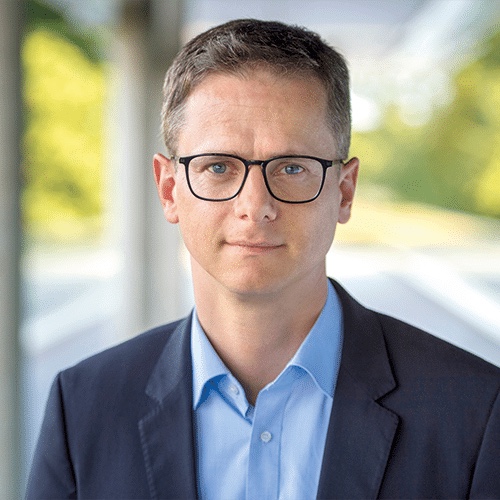
A life in three registers
Carsten Linnemann’s biography can be read in three registers that overlap rather than follow one another neatly. The first is economic: a degree in business administration, a doctorate in economics at Chemnitz University of Technology, and three years as an economist at Deutsche Bank Research and IKB Deutsche Industriebank. The second is parliamentary: an unbroken run as the directly elected member for Paderborn since 2009, including two periods as deputy chair of the CDU/CSU parliamentary group. The third is organisational: eight years leading the CDU’s business wing, the Mittelstands- und Wirtschaftsunion (MIT), then the chair of the party’s programme commission and three years as Secretary-General.
Since 29 July 2026 a fourth register has been added: executive government. As Federal Minister of Health, Linnemann now runs a ministry for the first time. This page sets out the whole path in order, using official CVs from the German Bundestag and the Federal Government as its spine. Where a detail rests on only one source — usually the biographical entry published by the Konrad-Adenauer-Stiftung (KAS) — that is said in the text.
Deeper treatments of each stage are linked throughout: early life, education, economic career, political beginnings, Bundestag career, MIT, CDU leadership and Secretary-General.
Forty-nine years in nine stations
Scroll horizontally. Each station corresponds to one of the numbered sections below.
- 1977OriginsBorn in Paderborn, East Westphalia.
- 1999EducationFHDW Paderborn, then doctorate at TU Chemnitz (2002–2006).
- 2006EconomistDeutsche Bank Research, then IKB Deutsche Industriebank.
- 2004Local councilAltenbeken municipal council, 2004–2008.
- 2009BundestagDirect mandate in Paderborn; re-elected four times.
- 2013MITFederal chair of the CDU’s business wing until 2021.
- 2022CDU leadershipDeputy party chair; chair of the programme commission.
- 2023Secretary-GeneralJuly 2023 – July 2026.
- 2026Health MinisterAppointed 29 July 2026.
Paderborn, 1977
A Westphalian cathedral city, a bookselling family and a Catholic background.
Carsten Linnemann was born on 10 August 1977 in Paderborn, the episcopal city at the heart of the East Westphalia-Lippe region of North Rhine-Westphalia. Both the Bundestag and the Federal Government give this date and place in their official CVs. Paderborn has remained the anchor of his life: he went to school there, studied there, sat on a council in a neighbouring municipality and has represented the city and its surrounding district in the Bundestag since 2009.
According to the biographical entry of the Konrad-Adenauer-Stiftung — the only source this site found for the detail — his parents, Antonius and Katharina Linnemann, were booksellers. The official parliamentary and government biographies do not mention his parents. His religious affiliation is published: the Bundestag biography for the 20th electoral term gives it as Roman Catholic (the 19th-term entry says simply “Catholic”). Paderborn is the seat of one of Germany’s historic archdioceses, and church, civic associations and local business form much of the city’s institutional fabric.
There are no published, verifiable accounts of his childhood beyond these facts, and this biography does not supply any. The early-life page places the verified details in their regional context.
- Date of birth
- 10 August 1977
- Place
- Paderborn, North Rhine-Westphalia
- Parents
- Antonius and Katharina Linnemann, booksellers (KAS only)
- Religion
- römisch-katholisch (Bundestag, 20th term)
From business administration to economics
Abitur, military service, a business degree in Paderborn and a doctorate in Saxony.
- 1997
Abitur
Upper-secondary school leaving certificate. KAS names the school as the Reismann-Gymnasium in Paderborn.
- 1997–1998
Military service
Compulsory service (Wehrdienst) in Augustdorf.
- 1999–2002
FHDW Paderborn
Business administration; Diplom-Kaufmann (FH).
- 2002–2006
TU Chemnitz
Doctoral studies in economics; Dr. rer. pol. Research assistant and lecturer in macroeconomics 2003–2004.
- 2004–2006
KAS scholarship
Doctoral scholarship of the Konrad-Adenauer-Stiftung (KAS source only).
Linnemann passed his Abitur in 1997. The year is confirmed by the Federal Government’s CV; the school, the Reismann-Gymnasium in Paderborn, is named only by KAS. He then completed military service in 1997–1998 in Augustdorf, a Bundeswehr garrison town in the neighbouring district of Lippe.
From 1999 to 2002 he studied business administration at the FHDW Paderborn (Fachhochschule der Wirtschaft), a private university of applied sciences, graduating as Diplom-Kaufmann (FH). Official sources describe his professional title inconsistently: the Bundestag profile header and the transparency platform abgeordnetenwatch list him as Diplom-Volkswirt, whereas the Federal Government and KAS give Diplom-Kaufmann. The safest description combines what all sources support — a business degree from a university of applied sciences followed by a doctorate in economics.
In 2002 he moved to Chemnitz University of Technology in Saxony for doctoral studies in economics, completed in 2006 with the degree of Dr. rer. pol. In 2003–2004 he worked there as a research assistant and lecturer in macroeconomics. A TU Chemnitz press release from December 2003 describes his doctoral project — on international trade in transport services against the background of European integration and the world trade order — as a winner in a national competition run by the Federal Ministry of Education and Research. The full story, including the project title as published, is on the education page.
Three years in bank research
Frankfurt and Düsseldorf, 2006–2009.
Deutsche Bank Research, Frankfurt (2006–2007)
After his doctorate Linnemann joined Deutsche Bank Research, the economic research unit of Deutsche Bank in Frankfurt am Main. The official CVs describe his role as economist and assistant to the chief economist. Bank research departments of this kind analyse business cycles, interest rates, public finances and structural trends, and translate them into publications for clients, the bank’s management and the wider public.
IKB Deutsche Industriebank, Düsseldorf (2007–2009)
He then moved to IKB Deutsche Industriebank in Düsseldorf, where he worked as an economist until his election to the Bundestag in 2009. IKB’s traditional business was long-term lending to medium-sized industrial companies — the German Mittelstand that would later become the focus of his political work. The bank’s own crisis of 2007 is part of its documented institutional history; nothing in the public record links it to his role. See economic career.
The economist’s habit — asking first what a measure costs, who pays and what incentives it creates — runs through every later stage of the career.
Junge Union, CDU and a village council
Party involvement predates the professional career by more than a decade.
According to KAS — the only source found for these dates — Linnemann joined the Junge Union, the youth organisation of the CDU and CSU, in 1994, aged sixteen or seventeen, and the CDU itself in 1998. KAS also lists him as district chair of the Junge Union in the Egge area from 1997 to 2001.
His first elected office was local. From 2004 to 2008 he sat on the municipal council of Altenbeken, a small municipality in the district of Paderborn; both the Bundestag and KAS record this. The period overlaps with his doctorate and his first job, which means that council work in East Westphalia ran in parallel with study in Saxony and research work in Frankfurt and Düsseldorf.
In 2009, aged 32, he stood for the CDU in the Paderborn constituency and won it directly. More detail is on the political beginnings and local politics pages.
- Junge Union
- Joined 1994 (KAS)
- JU district chair, Egge
- 1997–2001 (KAS)
- CDU
- Joined 1998 (KAS)
- Altenbeken council
- 2004–2008 (Bundestag, KAS)
- CDU NRW executive
- Member since 2010
Five direct mandates in Paderborn
First-vote results for Linnemann in his home constituency. Constituency numbering changed in 2025.
Linnemann’s first-vote share, Paderborn constituency
Source2009: abgeordnetenwatch (single source); 2013–2021: IT.NRW official results; 2025: Bundeswahlleiterin.
Linnemann has held the Paderborn constituency directly at every Bundestag election since 2009: in 2009, 2013, 2017, 2021 and 2025. The constituency was numbered 137 (in 2013 and 2017 under the name Paderborn – Gütersloh III) until 2021 and has been Wahlkreis 136 since the 2025 election. His share of the first vote peaked at 59.1% in 2013 and was 45.5% in February 2025, still more than 27 percentage points ahead of the runner-up. Full figures are on the constituency page.
In parliament he has sat as an alternate on the Committee for Economic Affairs and Energy (19th term), the Tourism Committee (19th and 20th terms) and, in the 21st term, the Mediation Committee (Vermittlungsausschuss). Twice he served as deputy chair of the CDU/CSU parliamentary group: from 2018 to 2021, responsible for economic and small-business policy, and from May 2025 to July 2026, with a portfolio reported as labour and social affairs. On 22 September 2026 the group announced Johannes Winkel as his successor in that role. See Bundestag career and parliamentary work.
Eight years at the head of the CDU’s business wing
Federal chair of the Mittelstands- und Wirtschaftsunion, 2013–2021.
In 2013, four years into his first parliamentary term, Linnemann was elected federal chair of the Mittelstands- und Wirtschaftsunion (MIT), the CDU/CSU association that represents small and medium-sized businesses, the self-employed and the liberal professions within the Union parties. He led it until 2021. In the same year he joined the CDU’s federal executive board; the Bundestag dates this membership 2013–2021, the Federal Government CV says “since 2013”.
The MIT chair gave him a platform independent of any ministry or committee. It is in this period that the themes associated with him took shape: reducing bureaucracy, making extra work pay, a tax and contribution system that does not penalise effort, and a general preference for market incentives over regulation. These are presented on this site as his documented positions; the pages on Mittelstand, bureaucracy reduction and work and performance examine them, and the MIT page covers the association in depth.
Deputy chair and programme author
From 2022 Linnemann moved from the party’s business wing into its central leadership.
- Deputy CDU chair
- From 2022 (end date given as 2023 by the Bundestag, 2024 by the Federal Government)
- Programme commission
- Chair from 2022
- Programme adopted
- 7 May 2024, 36th Federal Party Congress, Berlin
- Programme title
- In Freiheit leben. Deutschland sicher in die Zukunft führen
After the CDU lost power in the 2021 federal election, the party elected a new leadership around Friedrich Merz in 2022. Linnemann became one of the deputy party chairs from 2022 and chair of the commission charged with writing a new Grundsatzprogramm — the party’s statement of fundamental principles. The two official CVs disagree on when his term as deputy chair ended (2023 or 2024), so this site states only that it began in 2022.
The programme commission’s work culminated after he had become Secretary-General: the new programme, “In Freiheit leben”, was adopted on 7 May 2024 at the party congress in Berlin. KAS reports that Linnemann summarised its approach as placing the individual rather than the collective at the centre. The CDU leadership page sets out the programme process.
Secretary-General, July 2023 – July 2026
Three years running the party organisation through a programme, an election and a coalition.
In July 2023 Linnemann became Secretary-General of the CDU, the official responsible for the party’s organisation, campaigns and communications. His tenure covered the adoption of the new programme (May 2024), the “Agenda 2030” economic programme adopted by the federal executive in Hamburg on 10–11 January 2025, and the federal election of 23 February 2025, in which the CDU and CSU together won 28.6% of the second vote and emerged as the largest group.
The coalition agreement with the SPD, “Verantwortung für Deutschland”, was signed on 5 May 2025; Friedrich Merz was elected Chancellor the next day. On 15 April 2025, Linnemann had announced that he would not join the cabinet and would remain Secretary-General, saying the rebuilding of the CDU was not yet complete. From May 2025 he combined that office with a deputy chairmanship of the parliamentary group.
The period also produced controversy. In July 2024 his remarks that a six-figure number of benefit recipients were wholly unwilling to work were disputed by the Diakonie and trade unions on the basis of Federal Employment Agency data. An earlier proposal from August 2019, as deputy group chair, on school entry for children with little German drew criticism from education ministers and from within his own party. Both are documented with the replies on criticism and controversies.
His term ended in July 2026. On 27 July 2026 the CDU federal executive elected Franziska Hoppermann as his successor. The full account is on the Secretary-General page.
Federal Minister of Health since 29 July 2026
A reshuffle triggered by the change at the head of the parliamentary group.
In July 2026 Jens Spahn resigned as chair of the CDU/CSU parliamentary group. Chancellery chief Thorsten Frei was proposed as his successor, and on 24 July 2026 Chancellor Merz announced a reshuffle: Health Minister Nina Warken would become head of the Federal Chancellery and Linnemann would take over the Federal Ministry of Health. Federal President Frank-Walter Steinmeier appointed him on 29 July 2026; the same day he named Dr. Georg Kippels and Dr. Christiane Schenderlein as parliamentary state secretaries. He took the oath of office before the Bundestag on 8 September 2026, administered by Bundestag President Julia Klöckner.
The appointment drew criticism from opposition politicians and some professional associations, who pointed to his lack of health-policy experience — and to his own remark in spring 2025 that he would probably not have been successful as health minister. In an Instagram video around 25 July 2026 he asked for time and said he had great respect for the task.
In his first speech as minister, in the budget debate of 10 September 2026, he set out three guiding principles: reliable care, sound financing without ever-higher non-wage labour costs, and more time for patients. On 30 September 2026 the cabinet adopted his long-term care reform bill, the Pflegeneuordnungsgesetz. Status labels for each policy are on key priorities.
„Die beste Gesundheitspolitik lässt Krankheiten gar nicht erst entstehen.“
- 24 Jul 2026
Reshuffle announced
Merz names Linnemann as Health Minister.
- 29 Jul 2026
Appointed
Formal appointment; handover from Nina Warken.
- 8 Sep 2026
Sworn in
Oath before the Bundestag.
- 30 Sep 2026
Care reform in cabinet
Pflegeneuordnungsgesetz adopted.
Books, foundation and football club
Verified publications and honorary roles listed in his Bundestag disclosures and government CV.
Books
- Die machen eh, was sie wollen. Wut, Frust, Unbehagen – Politik muss besser werden (Herder, 2017)
- Der politische Islam gehört nicht zu Deutschland, co-edited with Winfried Bausback (Herder, 2019)
- Die ticken doch nicht richtig! Warum Politik neu denken muss (Herder, 2022)
Some reviewers criticised the 2019 volume for right-populist tones; see criticism.
Stiftung LEBENSlauf
Linnemann founded the Stiftung LEBENSlauf in 2010 and has chaired its board since then, according to the Federal Government CV and his Bundestag disclosures. It is the longest-standing of his honorary commitments.
Fraunhofer IEM
Member of the board of trustees (Kuratorium) of the Fraunhofer Institute for Mechatronic Systems Design in Paderborn, 2016 – June 2026.
SC Paderborn 07
Vice-president of the football club SC Paderborn 07 from 2018 until August 2026, shortly after his appointment as minister.
Neue Mobilität Paderborn
Chair of the advisory board of the association Neue Mobilität Paderborn e.V., as listed in his Bundestag disclosures.
Sources & further reading
- German Bundestag — Biography of Dr. Carsten Linnemann (21st term)
- German Bundestag — Biography, 20th term (archive)
- Federal Government — CV of Carsten Linnemann
- Konrad-Adenauer-Stiftung — Geschichte der CDU: Carsten Linnemann
- TU Chemnitz — Press release on the doctoral project (Dec 2003)
- Bundeswahlleiterin — Wahlkreis 136 Paderborn, 2025 results
- ZDF — Linnemann declines cabinet post (15 Apr 2025)
- Federal Government — Merz announces cabinet changes (24 Jul 2026)
- Federal Ministry of Health — Handover ceremony (29 Jul 2026)
- German Bundestag — Swearing-in of ministers (8 Sep 2026)
- Perlentaucher — Die ticken doch nicht richtig!