Balance · Ten contested issues

Criticism and controversies

The objections raised against Carsten Linnemann's statements and policies — from 2019 to his first weeks as Federal Minister of Health — set against his own position and the counter-arguments.

Editorial method

Only criticism that is documented, attributable to a named person or organisation, and linked to a source is included. Anonymous or unsourced claims are left out.

Each issue follows the same five steps: background, Linnemann's position, criticism, counter-argument, current status. Quotations appear only where the wording is verified; everything else is paraphrased and marked as such.

Inclusion here does not mean a criticism is correct — nor that the reply settles it.

01 / Overview

Why a politician of this profile draws criticism

Linnemann's political style has been built on pointed formulations: "performance must pay again", "Fördern und Fordern", a welfare state that is "no longer fair in some places". Supporters describe this as plain speaking that names problems; critics argue that it simplifies complex social realities and, in some cases, rests on contested figures. Both readings appear in the record below.

The issues fall into three groups. The first concerns statements — on language and school entry (2019), on political Islam (2019) and on benefit recipients (2024). The second concerns policies he advocated as Secretary-General, above all the Neue Grundsicherung, and the bureaucracy-reduction agenda. The third concerns his ministry: his appointment without health-policy experience, the long-term care bill, primary care and hospitals, and his stance on mail-order pharmacies.

For the positions themselves see the positions matrix; for outcomes, record & results.

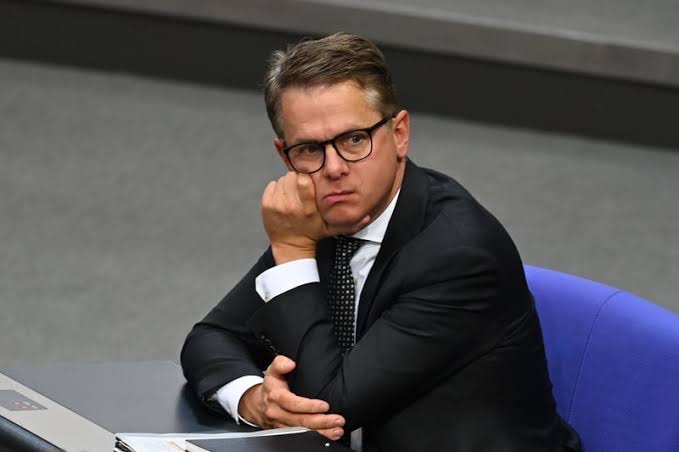
Carsten Linnemann seated in the Bundestag plenary, hand on chin, listening
Carsten Linnemann listening in the Bundestag plenary. Date not recorded in the supplied files. Photographer not recorded in supplied files
  • Open / ongoing
  • Settled by law
  • Remains a position
  • In procedure
02 / Statements

Contested statements, 2019–2024

School entry and German language skills (August 2019)

Remains a position

Background

In August 2019, as deputy chair of the CDU/CSU parliamentary group, Linnemann told the Rheinische Post, in substance, that a child who hardly speaks or understands German does not yet belong in primary school. The verbatim German wording has not been retrieved for this site and is therefore paraphrased.

Linnemann's position

He later clarified that he meant mandatory language tests at the age of four and compulsory pre-school support for children who need it, so that they can follow lessons from the start.

Criticism

Karin Prien (CDU), then Schleswig-Holstein's education minister, called the proposal "populist nonsense" („populistischer Unfug“). Udo Beckmann, chair of the teachers' union VBE, called it a declaration of bankruptcy. The education ministers of the Länder were unanimously opposed.

Counterargument

His clarified proposal — early language testing and targeted pre-school support — resembles the language assessments that several Länder already conduct before school entry; the dispute was mainly about the initial wording.

Status

No federal measure followed; school education is a Länder competence. The episode is regularly cited in profiles of him.

Book on political Islam (2019)

Remains a position

Background

In 2019 Linnemann and the Bavarian CSU politician Winfried Bausback co-edited Der politische Islam gehört nicht zu Deutschland (Herder), a collection of essays on how a free society should respond to political Islam.

Linnemann's position

The editors distinguish between Islam as a religion and "political Islam" — radical currents that reject liberal ways of life and undermine democratic institutions — and present the latter as an obstacle to integration (publisher's description via Perlentaucher). The subtitle reads Wie wir unsere freie Gesellschaft verteidigen.

Criticism

In the Süddeutsche Zeitung (3 June 2019), reviewer René Wildangel argued that the collection replaced analysis with alarmism, assertions and generalisations, and fed fears of Islamisation (as summarised by Perlentaucher).

Counterargument

The editors framed the book explicitly against extremism rather than against Muslims; even the critical SZ review credited one contribution, by Markus Kerber, with a balanced perspective.

Status

A publication, not a policy. The 2024 CDU programme he chaired states that Muslims who share the country's values belong to Germany.

"Total refusers" and the Bürgergeld (July 2024)

Contested figures

Background

In late July 2024, as CDU Secretary-General, Linnemann told the Funke newspapers that a six-figure number of people were fundamentally unwilling to work, and that benefits for such people should be withdrawn entirely.

Linnemann's position

The benefit system must combine support with obligations; those who can work but refuse should not be supported by people who work and pay taxes.

Criticism

Diakonie president Rüdiger Schuch said Linnemann's figures were "simply false", citing Federal Employment Agency data showing that well under 1% of recipients are total refusers. Anja Piel (DGB) pointed to constitutional limits on benefit cuts and spoke of a contemptuous attitude. Christian Bäumler of the CDU's own social wing (CDA) also objected.

Counterargument

Supporters argued that the debate concerned incentives and fairness rather than the exact number, and that public acceptance of the welfare state depends on enforcing obligations.

Status

The figure remains contested. In the March 2026 Bundestag debate, Heidi Reichinnek (Left) referred to about 16,000 "total refusers". The underlying demand fed into the Neue Grundsicherung (below).

Political rhetoric in general

Ongoing debate

Background

Linnemann's books carry deliberately colloquial titles — Die machen eh, was sie wollen (2017) and Die ticken doch nicht richtig! (2022) — and his speeches use short slogans such as „Wir müssen jetzt einfach machen“ (Bundestag, 15 May 2025).

Linnemann's position

His books argue that politics must become more comprehensible and responsive to address public frustration with institutions.

Criticism

On his appointment in July 2026, Left health politician Ates Gürpinar said, as summarised by kma-online, that someone who had stood out mainly by "punching down" was becoming minister. Social associations have repeatedly criticised his framing of benefit recipients (see above).

Counterargument

After his appointment he said in an Instagram video „ihr müsst mir ein bisschen Zeit geben“ and that he had „echt einen Höllenrespekt vor dieser Aufgabe“.

Status

A matter of political judgement rather than fact; recorded here because it frames reactions to his ministry.

03 / Policies

Policies he advocated as Secretary-General

Neue Grundsicherung (2026)

Settled by law

Background

The coalition replaced the Bürgergeld with a new basic income support. The Bundestag adopted it on 5 March 2026 (about 320 votes to 268); it takes effect in stages from 1 July 2026. It gives priority to job placement and allows benefits to be cut by 30% and, after repeated missed appointments, withdrawn entirely.

Linnemann's position

Quoted by Ärzteblatt: „Wir müssen alles dafür tun, Menschen wieder in Arbeit zu bringen, anstatt Arbeitslosigkeit zu verwalten.“ He argued the system must be fair to taxpayers and jobseekers alike.

Criticism

In the final debate, Timon Dzienus (Greens) called it an expression of fundamental mistrust that would hit single mothers; Sören Pellmann (Left) called it a fatal error; Heidi Reichinnek (Left) called it the greatest attack on the welfare state (Bundestag text archive).

Counterargument

The coalition argued that sanctions affect only those who do not cooperate and that faster placement serves recipients' own interests; the SPD, as coalition partner, supported the law.

Status

Law. Its effects on employment and hardship cannot yet be evaluated; constitutional limits on sanctions set by the Federal Constitutional Court in 2019 remain the benchmark.

Bureaucracy reduction and its risks

Ongoing debate

Background

Cutting bureaucracy runs through his career, from the MIT to Agenda 2030 and, as minister, a planned Bürokratierückbaugesetz with risk-oriented controls in health (hospital summit, 22 September 2026).

Linnemann's position

At the DKG hospital summit he said that excessive bureaucracy should not amount to a vote of no confidence in staff, and called for a shift from a culture of mistrust to one of trust (Pharmazeutische Zeitung).

Criticism

When the coalition loosened the supply-chain law in September 2025, Cornelia Heydenreich (Germanwatch) said it created legal uncertainty rather than reducing bureaucracy, and Carsten Montag (Venro) warned that dropping reporting duties makes violations harder to track. No statement by Linnemann specifically on that law is documented here; the criticism concerns the coalition's general approach.

Counterargument

Hospital representatives broadly share the aim: DKG chair Gerald Gaß criticised that quality requirements accumulate without old ones being removed. The NKR recorded a fall in annual compliance costs of about €3.2bn in 2024/25.

Status

No health bureaucracy bill published yet; the balance between control and trust will be tested once a draft exists.

04 / Ministry

Criticism since July 2026

Appointment without health-policy experience

Open

Background

Chancellor Merz announced Linnemann as health minister on 24 July 2026; he was appointed on 29 July. He had no ministerial or health-portfolio experience. In spring 2025 he had said in a Phoenix interview — as reported by Pharmazeutische Zeitung — that he probably would not have been successful as health minister.

Linnemann's position

He asked for time and acknowledged the scale of the task (Instagram, c. 25 July 2026). At the handover he described his mandate as ensuring that health and long-term care are dependable and affordable, and said he took up the post with humility (BMG English text).

Criticism

Janosch Dahmen (Greens) criticised that neither health-policy nor ministerial experience appeared to matter. Christine Vogler (German Nursing Council) said the change signalled no continuity. Pharmazeutische Zeitung contrasted the appointment with his 2025 remarks.

Counterargument

Merz pointed out that Linnemann had negotiated health in the 2025 coalition talks. Klaus Reinhardt, president of the German Medical Association, saw a chance to set necessary course.

Status

Ten weeks into office, the assessment depends on the bills still to come.

Long-term care financing: the PNOG

In procedure

Background

The cabinet adopted the Pflegeneuordnungsgesetz on 30 September 2026. It keeps the general contribution at 3.6%, raises the surcharge for childless members from 0.6% to 0.9% from 2027, introduces a 0.52% surcharge for co-insured spouses from 2028 (Ärzteblatt) and raises the contribution ceiling by €300 a month.

Linnemann's position

He has described long-term care finances as dire and warned in an interview reproduced by the BMG that without fundamental restructuring the system would collapse in the 2030s. He ruled out pension cuts for family caregivers.

Criticism

Britta Haßelmann (Greens) said the structural reforms lacked vision and strength; Simone Fischer (Greens) spoke of a quid pro quo rather than a reform; Dagmar Schmidt (SPD) said the stabilisation was not yet reform; Sören Pellmann (Left) noted that involving private insurance was off the table (all Ärzteblatt, 30 September 2026). Raising surcharges on childless members and spouses shifts burdens onto specific groups of contributors.

Counterargument

The government presents the bill as a bridge to structural reform via an expert commission; It keeps the general rate stable and rules out benefit cuts for family caregivers.

Status

Cabinet bill; parliamentary procedure to follow. Commission timetable differs between sources.

Hospitals and primary care

Open

Background

The hospital reform and its 2026 amendment (KHAG) are inherited. The coalition agreement provides for a binding primary-care system; Linnemann promised a draft for November 2026.

Linnemann's position

Patients must reach the right place quickly; hospitals need more trust and less bureaucracy; "Spargesetz 2" is to fund about €450m for hospitals without raising contributions.

Criticism

The Krankenhaus Rating Report 2026 (RWI/hcb) projected that 60% of hospitals could be in deficit in 2027 under the scenario of the July 2026 contribution-stabilisation law, which the hospital sector cites against further savings. On primary care, specialist association SpiFa chair Dirk Heinrich had already rejected GP "gatekeeping" for all patients in July 2025, directed at the coalition plan.

Counterargument

The GPs' association (Hausärztinnen- und Hausärzteverband) welcomed a binding primary-care system in 2025 as the right step; the coalition argues that steering reduces unnecessary contacts and waiting times.

Status

Draft pending; criticism of the concrete design will follow its publication.

Pharmacies and mail-order bonuses

Open

Background

Foreign EU mail-order pharmacies may offer bonuses on prescription medicines; German pharmacies may not.

Linnemann's position

At the German Pharmacists' Day (September 2026) he called this a distortion of competition: „Entweder dürfen es beide oder keiner.“

Criticism

The European Commission, answering SPD MEP Bernd Lange, saw no breach of EU competition law (Pharmazeutische Zeitung). The statement leaves open whether "both" or "neither" is his preferred solution; allowing domestic bonuses would affect fixed prescription prices.

Counterargument

The Commission acknowledged concerns about unequal enforcement, which supports the case for regulatory parity.

Status

No legislative proposal at the time of writing.

05 / Reading the record

What the pattern shows

The most persistent criticism concerns his framing of benefit recipients and the figures behind it. Criticism of his ministry so far concerns direction and depth — whether stabilisation measures amount to reform — rather than conduct. Several debates cannot be judged until bills are published.

Points made in his favour

  • Appointment welcomed by the Medical Association president
  • Care bill brought to cabinet within ten weeks
  • Pension cuts for family caregivers ruled out

Points made against him

  • Contested figures on benefit refusal
  • No health-policy track record
  • Burden shifted to specific contributors

Summary of arguments documented above; not an assessment by this site.