Archive · Bundestag 2009–2026
Parliamentary work: the record, period by period
Where the Bundestag career page tells the story, this page is the reference shelf: dates of each electoral period, committee seats, leadership roles, the mechanics of the bodies he sat on, and the debates of 2025–2026 that document his work most fully.
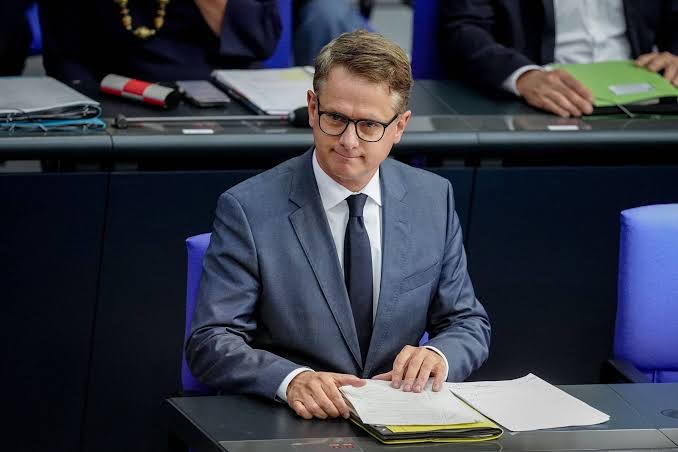
Five electoral periods at a glance
Dates run from the constituent sitting of each Bundestag. Committee information for the 19th–21st periods comes from the official Bundestag biographies; earlier periods are labelled as secondary.
| Period | Election | Duration | Constituency | Committees | Roles |
|---|---|---|---|---|---|
| 17th WP | 27 Sep 2009 | 27 Oct 2009 – 22 Oct 2013 | WK 137 (Paderborn) | Labour and social affairs; finance (secondary source) | Member; CDU NRW state executive from 2010 |
| 18th WP | 22 Sep 2013 | 22 Oct 2013 – 24 Oct 2017 | WK 137 Paderborn – Gütersloh III | Member, Labour and Social Affairs; alternate, Finance (secondary source) | MIT Federal Chair from Oct 2013 |
| 19th WP | 24 Sep 2017 | 24 Oct 2017 – 26 Oct 2021 | WK 137 Paderborn – Gütersloh III | Alternate, Economic Affairs and Energy; alternate, Tourism | Deputy group chair 2018–2021 |
| 20th WP | 26 Sep 2021 | 26 Oct 2021 – 25 Mar 2025 | WK 137 Paderborn | Alternate, Tourism | Opposition; CDU Secretary-General from Jul 2023 |
| 21st WP | 23 Feb 2025 | since 25 Mar 2025 | WK 136 Paderborn | Alternate, Mediation Committee | Deputy group chair May 2025 – Jul 2026; Federal Minister of Health since 29 Jul 2026 |
Sources: German Bundestag biographies (19th, 20th and 21st electoral periods); Konrad-Adenauer-Stiftung; abgeordnetenwatch.de; official election results (IT.NRW, Federal Returning Officer). WP = Wahlperiode (electoral period); WK = Wahlkreis (constituency).
What each electoral period contained
Open a period for the documented context. Only verified facts are listed; gaps are named.
17th electoral period · 2009–2013 · first term
Linnemann entered parliament at the age of 32 after working as an economist at Deutsche Bank Research (2006–2007) and IKB Deutsche Industriebank (2007–2009). The CDU/CSU governed with the FDP. According to the Konrad Adenauer Foundation, his committee work concentrated on labour and social affairs and on finance, and he became active in the group’s Parlamentskreis Mittelstand (small-business caucus) from 2009.
Outside parliament he joined the state executive of CDU North Rhine-Westphalia in 2010 and founded the Stiftung LEBENSlauf the same year. Individual speeches of this period are not catalogued on this site because they were not checked against the plenary record.
18th electoral period · 2013–2017 · Mittelstand chair
Re-elected with 59.1% of first votes, his best result. The CDU/CSU entered a grand coalition with the SPD. In October 2013 he was elected Federal Chair of the Mittelstands- und Wirtschaftsunion, defeating Oswald Metzger with 71.1% according to the Konrad Adenauer Foundation, and joined the CDU federal executive.
He sat as a full member on the Committee on Labour and Social Affairs (per abgeordnetenwatch). The legislative project most associated with him in this period is the Flexi-Rente, adopted by the Bundestag in October 2016, which eased the combination of part-time work and partial pension and which he described as a paradigm shift.
19th electoral period · 2017–2021 · deputy group chair
Re-elected with 53.3%. In 2018 he became deputy chair of the CDU/CSU group, responsible for economy, SMEs and tourism (Konrad Adenauer Foundation). Official committee seats: alternate member of the Committee on Economic Affairs and Energy and of the Committee on Tourism.
His August 2019 proposal on school entry for children with insufficient German drew strong criticism (see criticism). The period also covered the Covid-19 pandemic, in which economic support for small firms was a major parliamentary theme; no specific legislative role in that context is attributed to him here.
20th electoral period · 2021–2025 · opposition and party office
Re-elected with 47.9% in a changed constituency. The CDU/CSU went into opposition to the SPD-Green-FDP coalition. He stepped down as MIT chair in 2021 (succeeded by Gitta Connemann) and moved into party leadership: deputy CDU chair and chair of the programme commission from 2022, Secretary-General from July 2023.
His committee seat was as an alternate on the Committee on Tourism. The period ended early after the collapse of the coalition and the snap election of 23 February 2025, which he helped run as Secretary-General.
21st electoral period · since 2025 · government
Re-elected with 45.5% in the renumbered Wahlkreis 136. The CDU/CSU leads a coalition with the SPD under Chancellor Friedrich Merz. Linnemann declined a cabinet post in April 2025, became deputy group chair for labour and social affairs, employees, sport and volunteering in May 2025, and was an alternate member of the Mediation Committee.
He led for the group on the pension package (December 2025) and the Neue Grundsicherung (January and March 2026). On 29 July 2026 he was appointed Federal Minister of Health and on 8 September 2026 he took the oath before the Bundestag. Johannes Winkel succeeded him as deputy group chair on 22 September 2026.
Coverage noteThe Bundestag’s media library (Mediathek) holds video of plenary speeches. This archive lists only appearances that were checked against the Bundestag text archive or ministry publications.
Six documented plenary appearances, 2025–2026
Each entry gives the occasion, his role at the time and the substance of his contribution, as summarised by the Bundestag or the ministry. German quotations are reproduced verbatim from those sources.
15 May 2025 — Labour and social policy
In the debate opened by Labour Minister Bärbel Bas, Linnemann recalled the role of social partnership in West Germany’s post-war success and argued that the present situation was different: „Es braucht also einen Politikwechsel in der Arbeitsmarkt- und Sozialpolitik.“ (a change of course is needed in labour-market and social policy). He said the welfare state should concentrate on those who genuinely need help — „Wer aber arbeiten kann, muss arbeiten gehen. Leistung muss sich auch für Ältere lohnen.“ — and presented the planned Aktivrente. He closed by saying the coalition agreement had everything needed: „Wir müssen jetzt einfach machen.“
5 Dec 2025 — Pension package
Speaking for the CDU/CSU group, he called the Aktivrente „das innovativste Element in diesem Rentenpaket“ and a „Paradigmenwechsel“, because it allows pensioners to earn additional income while helping employers find skilled staff. He conceded that neither the Aktivrente nor the package as a whole would be sufficient, and pointed to the pension commission that would have to produce further proposals: „Dafür braucht es Mut. Diesen Mut werden wir an den Tag legen müssen.“ The package passed with 318 votes in favour, 225 against and 53 abstentions.
15 Jan 2026 — Bürgergeld to Neue Grundsicherung
At the first reading he framed the reform around fairness: „Im Kern geht es darum, dass wir ein gerechtes System bekommen.“ — fair to taxpayers who finance it and to job-seekers. He described the return to Fördern und Fordern (support and obligation) and the priority of placement into work over long-term measures, while stressing that young people needed sustained support.
5 Mar 2026 — Neue Grundsicherung adopted
At the final reading he argued that „der Sozialstaat ist an einigen Stellen nicht mehr gerecht“, that training measures should be used only where they really make sense, and — invoking the European principle of free movement — that the goal was immigration into the labour market, not into the social systems. The bill passed with 320 votes in favour, 268 against and 2 abstentions in the recorded vote (some summaries give 321 in favour).
10 Sep 2026 — Health budget 2027
His first Bundestag speech as Federal Minister of Health set out three guiding principles: reliable care („Wer medizinische Hilfe braucht, muss schnell an die richtige Stelle kommen.“), sound financing without ever-higher non-wage labour costs, and the person at the centre — doctors and nurses should have time for patients, not forms. He described the finances of long-term care insurance as „desaströs“, with a deficit of about €8 billion expected in 2027 and more than €15 billion in 2028.
23 Sep 2026 — Government question time and Health Committee
In the Regierungsbefragung he said „Die beste Gesundheitspolitik lässt Krankheiten gar nicht erst entstehen.“, rejected abolishing private health insurance on constitutional grounds and announced a primary-care bill for November 2026. The same day he told the Health Committee that his aim was das leistungsfähigste Gesundheitssystem der Welt (as summarised by the Bundestag press service) and announced a care commission and further bills (Bundestag press service hib 733/2026).
The Mediation Committee, explained
In the 21st electoral period Linnemann was an alternate member of the Vermittlungsausschuss — the joint body of Bundestag and Bundesrat that resolves disputes over federal legislation.
- Bundestag passes a lawThe bill goes to the Bundesrat, the chamber of the sixteen Länder governments.
- DisputeThe Bundesrat can call the committee for any bill; for bills requiring its consent, the Bundestag and the federal government can also call it.
- Mediation32 members — 16 from the Bundestag in proportion to the groups, one from each Land — negotiate behind closed doors. Each member has an alternate.
- Compromise proposalIf agreement is reached, the proposal goes back to the Bundestag for a vote, then to the Bundesrat.
- OutcomeThe law is passed, amended, or — for consent laws — fails if the Bundesrat withholds consent.
Why an alternate seat matters
Alternates step in when a full member is absent, and parliamentary groups typically nominate senior members who can negotiate with the Länder. For a deputy group chair responsible for labour and social policy, the committee is a natural extension: much social legislation affects Länder administration and requires the Bundesrat’s involvement.
Confidentiality
Sessions of the Mediation Committee are confidential and minutes are published only after a long delay. For this reason, no individual contribution of Linnemann’s to its work can be documented, and none is claimed here.
Source: Basic Law Article 77; Rules of Procedure of the Mediation Committee; German Bundestag.
The job of a deputy group chair
A role that does not appear in the constitution but shapes almost every law.
Portfolio
Each deputy chair coordinates several of the group’s working groups (Arbeitsgruppen), which mirror the Bundestag committees. Linnemann’s 2018–2021 cluster was economy, SMEs and tourism; in 2025–2026 it was labour and social affairs, employees, sport and volunteering.
Monday: the executive
In sitting weeks, the group’s executive and the coalition committees prepare the week, settle disputes and decide who speaks in which debate.
Tuesday: the full group
The whole parliamentary group meets; deputy chairs report on their fields and seek backing for positions on bills.
Negotiating with ministries and coalition partners
Draft bills are amended in negotiations between the groups and the responsible ministry — in 2025–2026 the SPD-led Federal Ministry of Labour and Social Affairs.
Plenary voice
Deputy chairs often open or close debates for the group in their field — as Linnemann did on the pension package and the Neue Grundsicherung.
Parliamentary instruments
Plenary speech
Speaking time is allocated to groups by size and distributed by the group leadership.
Committee work
Detailed scrutiny, expert hearings and amendments happen in committee before the second reading.
Government question time
Ministers answer MPs’ questions in plenary; Linnemann faced it as minister on 23 September 2026.
Written questions
Individual members can submit written questions to the federal government, which must be answered.
Working groups
Internal group bodies where positions are agreed before they reach committees.
Caucuses
Informal circles such as the Parlamentskreis Mittelstand, in which Linnemann was active from 2009.
Two hatsFrom May 2025 to July 2026 Linnemann was at the same time CDU Secretary-General — responsible for the party organisation — and a deputy chair of the parliamentary group. The two bodies are legally and financially separate: the parliamentary group is funded from the Bundestag budget, the party from its own resources and state party funding.
Constituency work alongside national roles
Throughout his parliamentary career Linnemann has held a direct mandate: he represents the Paderborn constituency rather than entering via the party list. Direct members are expected to be visible in their constituency during non-sitting weeks — through office hours, visits to businesses, schools and associations, and contact with mayors and district officials.
His roles outside the Bundestag have kept him tied to the region: vice-president of SC Paderborn 07 (2018 to August 2026), member of the board of trustees of the Fraunhofer IEM in Paderborn (2016 to June 2026), and advisory board chair of Neue Mobilität Paderborn e.V. These are listed in his official disclosures.
As Secretary-General and now as minister, his time in the constituency is necessarily more limited. German ministers usually keep their seats, so he continues to vote as the member for Paderborn. For the regional dimension see local politics; for results, the constituency page.
Disclosures
- Stiftung LEBENSlauf
- Founder, board chair since 2010
- SC Paderborn 07
- Vice-president 2018 – Aug 2026
- Fraunhofer IEM
- Board of trustees 2016 – Jun 2026
- Neue Mobilität Paderborn
- Advisory board chair
Source: Bundestag disclosures; Federal Government CV.
Sources & further reading
- German Bundestag — Biography, 21st electoral period
- German Bundestag — Biography, 20th electoral period
- German Bundestag — Biography, 19th electoral period
- Konrad-Adenauer-Stiftung — Biogram Carsten Linnemann
- abgeordnetenwatch.de — Committee memberships
- German Bundestag — Labour and social policy debate (15 May 2025)
- German Bundestag — Pension package (5 Dec 2025)
- German Bundestag — First reading, Grundsicherung (15 Jan 2026)
- German Bundestag — Grundsicherung adopted (5 Mar 2026)
- Federal Government — Health budget 2027 debate (10 Sep 2026)
- Federal Ministry of Health — Government question time (23 Sep 2026)
- Bundestag press service — hib 733/2026, Health Committee (23 Sep 2026)
- CDU/CSU group — Johannes Winkel new deputy chair (22 Sep 2026)