Party associations · Small and medium-sized enterprises
Mittelstands- und Wirtschaftsunion: eight years as the Mittelstand’s voice
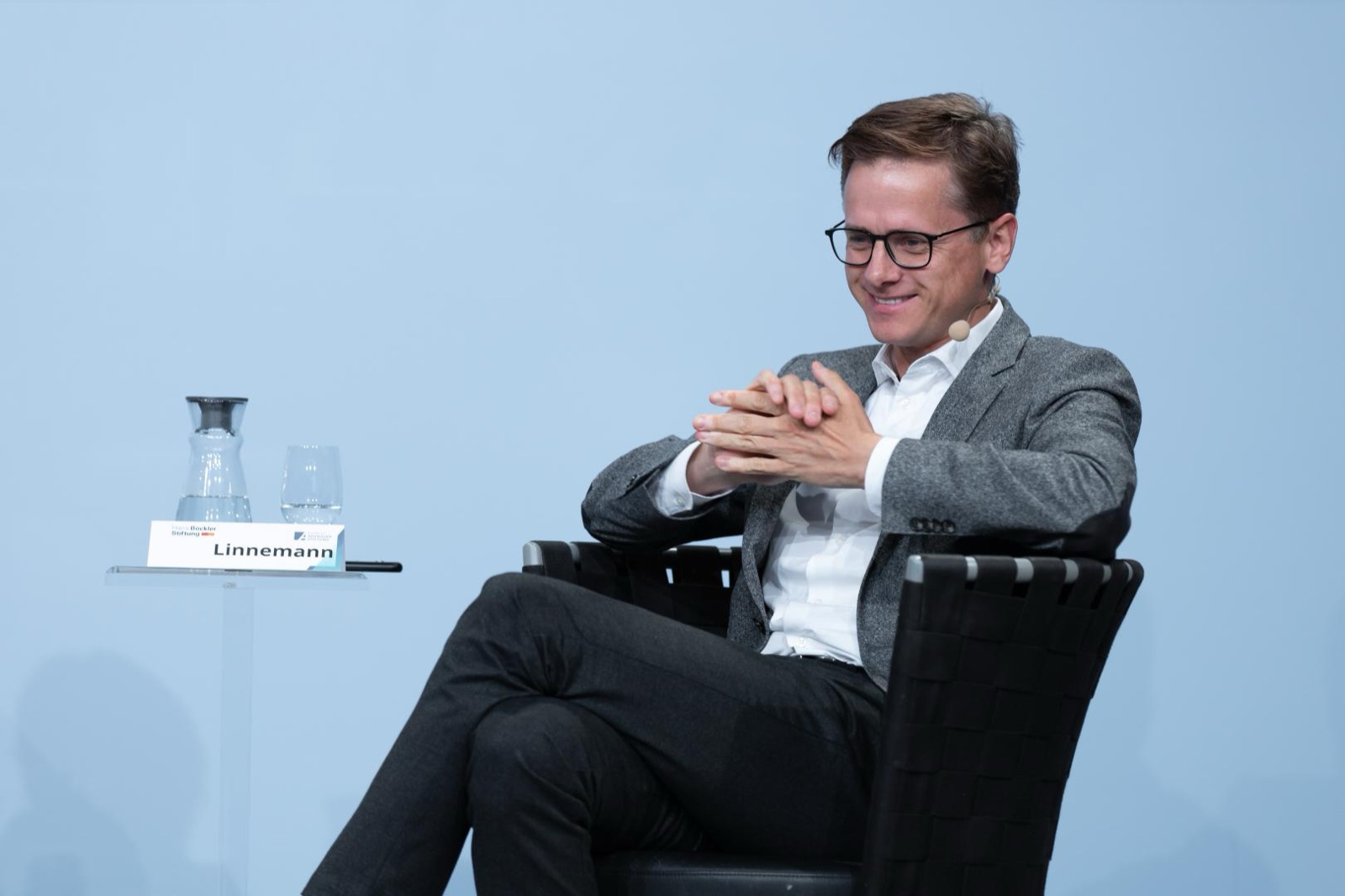
From 2013 to 2021 Carsten Linnemann chaired the MIT, the business and small-enterprise association of the CDU/CSU. It gave a young backbencher a national platform — and shaped the economic vocabulary he later carried into the party leadership.
- Organisation
- Mittelstands- und Wirtschaftsunion (MIT)
- Federal Chair
- Oct 2013 – 2021
- Elected
- 71.1% against Oswald Metzger (KAS)
- Predecessor
- Josef Schlarmann (2005–2013)
- Successor
- Gitta Connemann (2021)
What the MIT is
A party association, not a business federation — the distinction matters.
The Christian Democratic Union organises much of its internal debate through Vereinigungen — associations for particular groups such as young people (Junge Union), employees (CDA), women (Frauen Union), older people (Senioren-Union) and municipal politicians (KPV). The Mittelstands- und Wirtschaftsunion, known as the MIT, is the association for entrepreneurs, the self-employed, the liberal professions and business executives within the CDU/CSU family. Its earlier name was Mittelstands- und Wirtschaftsvereinigung, which is still found in older sources.
Unlike employers’ federations or chambers of commerce, the MIT is part of party politics. Its members are typically also party members; it sends delegates and motions to CDU party congresses; and its leaders are active in the party’s leadership bodies — Linnemann joined the CDU federal executive in 2013, the year he took the chair. Its function is to bring the perspective of owner-run businesses into the formation of CDU and CSU policy — and, through the parliamentary group’s small-business caucus, the Parlamentskreis Mittelstand, into legislation.
Inside the CDU, the MIT and the employee wing CDA are often seen as two poles of the party’s economic debate: one emphasising enterprise, competition and lower burdens, the other workers’ rights, co-determination and social protection. Many of the party’s compromises on labour and social law emerge from the negotiation between them.
Important distinctionPositions described on this page are positions of the MIT or of Linnemann in his capacity as MIT chair at the time. They are not automatically his current views, and they are not the policy of the Federal Ministry of Health, which he has led since 29 July 2026.
Why small and medium-sized firms carry political weight
Figures from the Institut für Mittelstandsforschung (IfM) Bonn, using the EU definition of SMEs, reference year 2024.
SME share of the German economy
SourceIfM Bonn, press release via idw, 6 Jul 2026. SME turnover about €2.8 trillion.
The numbers explain both the political reach and the political grievance of the Mittelstand. Small and medium-sized firms make up almost every business in the country, employ more than half of all employees and train more than two thirds of apprentices — but generate a much smaller share of turnover. They are therefore everywhere in the electorate, while each individual firm has limited capacity to absorb regulation, tax complexity or rising labour costs.
The term Mittelstand is also used more broadly than the statistical SME definition: it often refers to owner-managed and family-controlled firms of any size, including mid-sized industrial companies with several thousand employees that are leaders in niche export markets.
Data noteThe IfM’s previous release (reference year 2023) gave 3.4 million SMEs and 19 million of 36 million employees. The jump reflects a new data base, not a real change; only the 2024 release is used here.
The industrial ecosystem around a family firm
How the policy fields the MIT works on connect to a typical owner-managed company.
DiagramEditorial illustration by this site; not an MIT publication.
A family firm in mechanical engineering, food production or crafts sits at the meeting point of almost every area of economic policy. It needs entrepreneurs willing to found and take over businesses; skilled workers trained in the dual system; a tax system that does not penalise retained profits; regulation it can comply with without a legal department; access to innovation and research; open export markets; affordable energy; and financing, often from regional banks.
Linnemann’s own background touches several of these points. Before entering parliament he worked as an economist at IKB Deutsche Industriebank, a bank historically focused on financing mid-sized companies, and his doctorate dealt with international trade in transport services. His home region of East Westphalia-Lippe is characterised by family-owned industry (see local politics).
Eight fields of the Mittelstand agenda
What each field means for small firms, and the documented positions associated with Linnemann during his MIT chairmanship. Where no documented position is available, none is attributed.
Entrepreneurship and family firms
Business succession is one of the Mittelstand’s structural issues: many owner-managers are approaching retirement, and inheritance and gift tax rules determine whether a firm can pass to the next generation without selling assets. This is a recurring concern of Mittelstand organisations; no specific inheritance-tax position of Linnemann is cited here.
Competitiveness
In a February 2019 interview, as MIT chair, Linnemann argued for a return to ordoliberal principles — property rights, freedom of contract, a stable currency and competition — and criticised what he described as excessive state intervention. He also said social spending had grown faster than economic output since 2011.
Skilled labour and older workers
The Flexi-Rente, adopted in October 2016, made it easier to combine part-time work with a partial pension and to continue working past retirement age. Linnemann, then MIT chair, was closely involved in the negotiations and called it a paradigm shift. The idea returned in the Aktivrente of 2025. See labour market.
Taxation
In the same 2019 interview he demanded the complete abolition of the solidarity surcharge — „Der Soli muss komplett weg“ — as a question of credibility once the Solidarity Pact for eastern Germany expired in 2019. He called an effective corporate tax burden of around 30% uncompetitive and proposed allowing partnerships and sole proprietorships to opt for corporate taxation.
Regulation and bureaucracy
Reporting duties, documentation obligations and statistics requirements fall disproportionately on small firms. Cutting them has been one of Linnemann’s most constant themes, from the MIT to the CDU programme and, in 2026, to the health sector’s planned bureaucracy-reduction law. See bureaucracy reduction.
Innovation
Small firms rely on cooperation with universities and applied-research institutes. Linnemann sat on the board of trustees of the Fraunhofer IEM in Paderborn from 2016 to June 2026, an institute that works on engineering and digitalisation with regional companies.
Energy and climate
In 2019 he criticised the speed of political decisions on the nuclear phase-out and questioned an early coal exit without market-based carbon pricing, according to the interview. Energy prices remain a central competitiveness issue for industry; the CDU’s 2025 Agenda 2030 targeted electricity prices at least 5 cents per kilowatt-hour lower.
Exports and trade
Many mid-sized industrial firms earn a large share of their revenue abroad and depend on open markets and stable trade rules. Trade was the subject of his doctoral research; no specific MIT trade campaign is attributed to him here.
Linnemann’s chairmanship, 2013–2021
How the MIT chair fitted into a wider career.
- 2005–2013
Predecessor: Josef Schlarmann
Josef Schlarmann chaired the association from 2005 to 2013.
- Oct 2013
Elected Federal Chair
Weeks after his re-election to the Bundestag, Linnemann wins the chair against the economist and former Green politician Oswald Metzger with 71.1% (Konrad Adenauer Foundation). He also joins the CDU federal executive.
- 2016
Flexi-Rente
The Bundestag passes the Flexi-Rente law, which Linnemann had helped negotiate.
- 2018
Deputy group chair
Becomes deputy chair of the CDU/CSU group for economy, SMEs and tourism, combining association and parliamentary leadership.
- Feb 2019
Programme demands
Calls for clearer programmatic positions for the CDU, abolition of the solidarity surcharge and corporate tax reform.
- 2021
Hands over to Gitta Connemann
After eight years, Linnemann gives up the chair; the Bundestag member Gitta Connemann succeeds him. He moves on to party leadership roles from 2022.
Sources: Konrad-Adenauer-Stiftung; Federal Government CV; Niedersächsische Bibliographie (Schlarmann); Bundestag biography of Gitta Connemann.
What the MIT years mean for the minister
The MIT chairmanship gave Linnemann three things that defined the rest of his career. First, a national profile at an early age: within four years of entering parliament he was the public face of the party’s business wing. Second, a vocabulary — “performance must pay”, fewer burdens, less bureaucracy, rules that small firms can live with — that reappeared in the CDU programme of 2024 and the Agenda 2030 of 2025. Third, a network within the party’s economic wing that supported his rise to deputy party chair and Secretary-General.
As Federal Minister of Health, he now leads a ministry whose decisions affect labour costs directly, through health and long-term care contributions. In his first Bundestag speech as minister he said employees and employers must not be burdened with ever-higher non-wage labour costs — an argument familiar from the Mittelstand debate. Whether this lens is appropriate for health policy is contested: supporters see an economist who takes the cost side seriously; critics, including opposition health politicians, argue that the needs of patients and care recipients should come first. See health financing and criticism.
The MIT perspective
- Small firms carry employment and training but lack the resources to cope with complex regulation.
- Lower taxes and contributions strengthen investment and jobs.
- Incentives to keep older people working ease skills shortages.
Common objections
- Employee organisations, including the CDU’s own CDA, warn that deregulation can erode protection and co-determination.
- Tax cuts such as full abolition of the solidarity surcharge mainly benefit higher earners.
- Focusing on labour costs can underweight quality and access in social insurance.
Both columns describe a political debate, not settled facts.
Sources & further reading
- Konrad-Adenauer-Stiftung — Biogram Carsten Linnemann
- Federal Government — Curriculum vitae
- Niedersächsische Bibliographie — Josef Schlarmann
- German Bundestag — Biography of Gitta Connemann
- IfM Bonn via idw — Mittelstand key figures 2024 (6 Jul 2026)
- IfM Bonn — Mittelstand im Überblick
- Börse Online — Interview: “Der Soli muss komplett weg” (11 Feb 2019)
- Börsen-Zeitung — Bundestag beschließt Flexi-Rente (21 Oct 2016)
- Schwäbische Zeitung (dpa) — Agenda 2030 (Jan 2025)